
Walnut for Chess Boards: Properties and Advantages
Click through chess board listings for long enough, and you'll run into the same name almost everywhere: walnut. That's no accident — few woods balance looks, stability, and availability quite so well.
What sets walnut apart
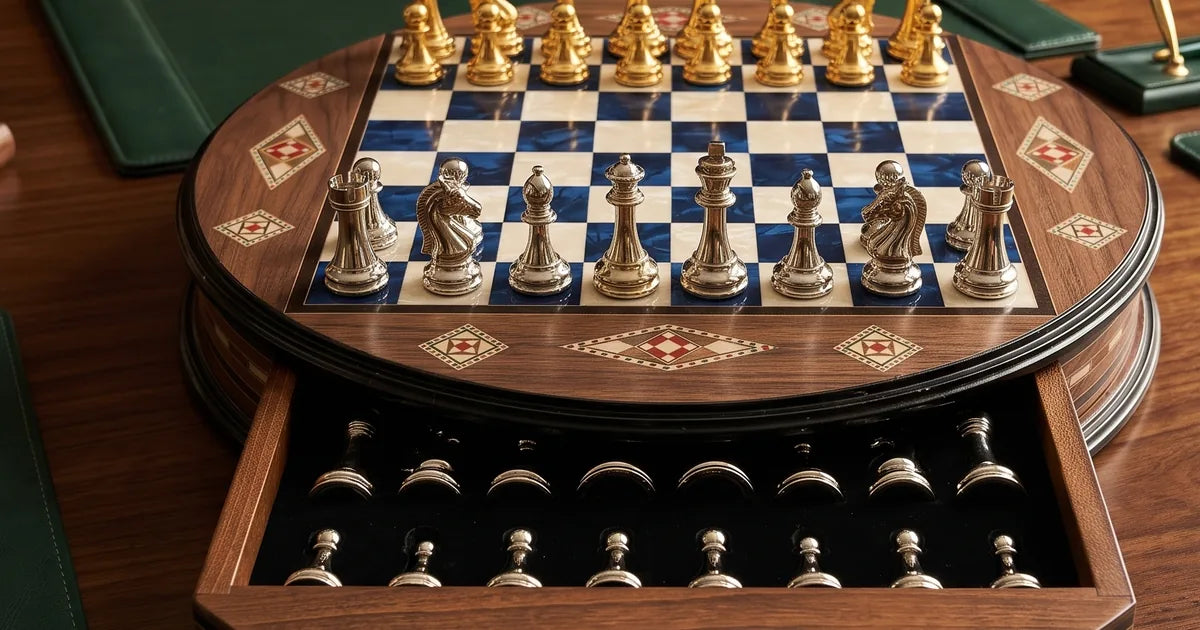
Walnut is a medium-density hardwood that's easy to work with, known for its warm, chocolate-brown color and a lively, often gently waved grain. That grain makes every board one of a kind — two boards from the same tree rarely look identical.
Stability in everyday use
Unlike many exotic woods, walnut reacts fairly calmly to changes in temperature and humidity. That makes it a robust choice for a board that gets used regularly, not just displayed.
The classic pairing
In most high-quality sets, dark walnut forms the dark squares while a lighter contrast — usually maple — takes the light ones. That warm brown-and-cream contrast is noticeably easier on the eyes than plain black and white, and makes long games more comfortable.
Schachatelier: at home in Berlin
Schachatelier is at home in Berlin. Every set is handcrafted by experienced makers — with carefully selected walnut for boards built to last decades.
→ Discover handcrafted collector's pieces
Frequently Asked Questions
Why is walnut used so often for chess boards?
It combines good looks, stability, and workability — the warm, lively grain makes every board one of a kind, without the wood being fragile.
How does walnut respond to humidity and temperature?
Fairly calmly — it's one of the more stable woods for everyday use, though like any solid wood it doesn't tolerate extreme swings.
What is walnut traditionally paired with?
Usually with a lighter wood like maple, to create the classic warm contrast between the dark and light squares.