

News

Softwood or Hardwood: What Really Matters for a Chess Board
When buying wood for furniture or flooring, softwood and hardwood come up often. With chess boards, this distinction is rarely explained — yet it plays a major role in how long a board actually las...
Read more
Mahogany for Chess Boards: A Warm Redwood with History
Few woods carry as much history as mahogany — the material of choice for fine furniture for centuries, and just as long prized for high-quality chess boards. What sets mahogany apart Mahogany is a ...
Read more
Birch for Chess Boards: A Light, Sturdy Wood in Focus
Alongside familiar classics like maple or boxwood, an underrated wood keeps showing up in chess boards: birch. Less prestigious by name, but a surprisingly good technical choice. What sets birch ap...
Read more
Which Wood Combination Works Best? Light and Dark Contrast Compared
A chess board is almost always made from two woods — one light, one dark. Which combination is right depends less on personal taste than most people think. There are clear, proven patterns. The gol...
Read more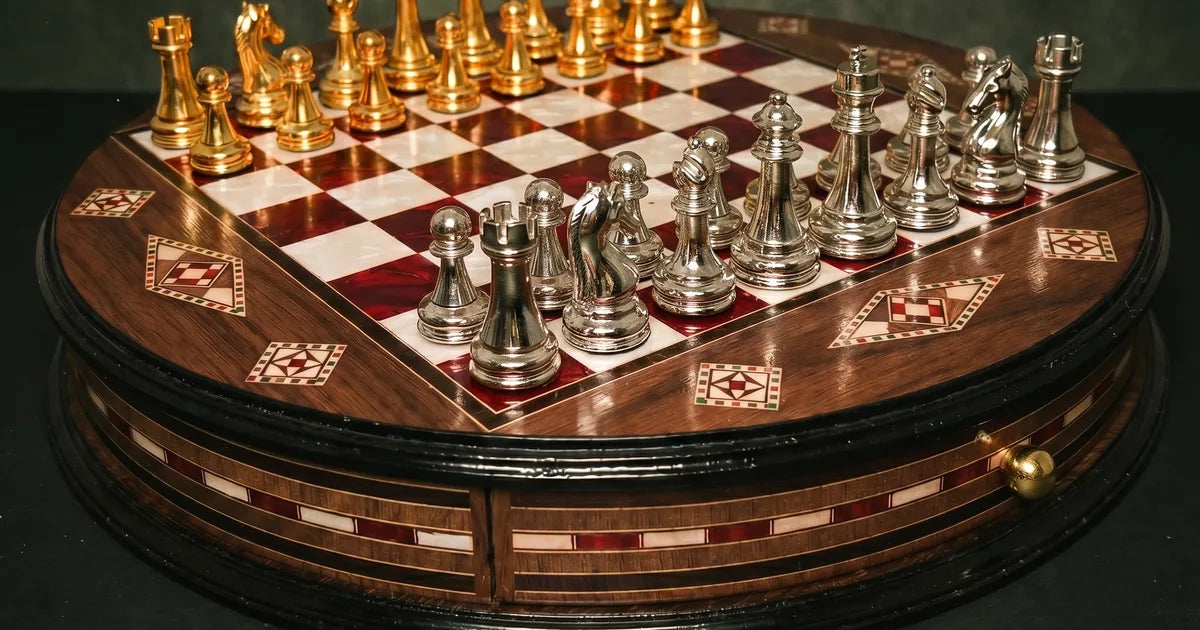
Sheesham in Chess Pieces: India's Rosewood Alternative
Alongside rosewood, a second name keeps coming up in chess pieces: sheesham. Some use the terms almost interchangeably — not quite accurately, since there are real differences. What sheesham is She...
Read more
Maple for Chess Boards: The Light Counterpart to Walnut
While walnut takes care of the dark squares, another wood handles the light side on most classic chess boards: maple. Unassuming, but essential. What sets maple apart Maple is a fine-grained, light...
Read more
Walnut for Chess Boards: Properties and Advantages
Click through chess board listings for long enough, and you'll run into the same name almost everywhere: walnut. That's no accident — few woods balance looks, stability, and availability quite so w...
Read more
Boxwood in Chess Pieces: The Standard for Staunton Sets
Few woods are as closely tied to classic chess design as boxwood. Since the Staunton form was established in the 19th century, it has been the first choice for light pieces — for good reason. Why b...
Read more
Ebony in Chess Pieces: Why It's the Standard for Black
Anyone exploring high-quality chess pieces will almost inevitably come across ebony — the material that has been the standard for dark pieces for generations. But what makes this wood so special, a...
Read more
Rosewood in Chess Pieces: Properties and Care
Rosewood is one of those woods that has become almost synonymous with luxury in the world of high-quality chess pieces. The dark, often reddish-brown grain with fine dark veins makes every piece on...
Read more