
Engraving in Wood: What Becomes of It After Twenty Years
An engraving is a promise. It says: this stays. A name, a date, a line — set permanently into the wood. But does it really hold up? What actually happens to an engraving after twenty years? After fifty?
Why an engraving can't fade
The difference from printing is fundamental. Printing sits on the wood — a layer of ink on the surface. It can chip, scratch, fade.
A laser engraving goes into the wood. The laser removes material and lightly chars the fibers along the cut edge. The lettering isn't a layer — it's a recess. It's become part of the structure itself.
That's why an engraving can't fade. The only way it could disappear is if the wood were sanded down deep enough to remove the entire depth of the cut.
What does change over time
Honestly, something does shift — just not the engraving itself. The wood around it.
Solid wood darkens over the years — the same patina that enhances the rest of the board (more on that in Patina: Why a Chess Board Gets More Beautiful With Age). An engraving that started out dark against light wood ends up with less contrast later on. It hasn't gotten weaker — the background has simply caught up to it.
On most sets, this effect is barely noticeable over decades. On very light woods, it can become visible after twenty years or so. It's the price of wood that's actually alive.
Care: the same as everything else
An engraving doesn't need special treatment. What's good for the board is good for it too — the full care routine is in Caring for a Chess Board: What Wood Needs — and What Damages It:
- Dust it dry. A soft cloth, no pressure.
- Don't dig into it. The most common mistake: trying to “clean out“ dust from the grooves with a needle, a brush, a toothpick. That damages the edges. A soft brush is all you need.
- Let it get oiled with the rest. Oil can run over the engraving — it absorbs it just like the surrounding wood. Wipe off with a dry cloth afterward.
- No water, no chemicals. This matters especially here: liquid sits longer in the grooves than on a flat surface.
The mistake that actually ruins an engraving
Not time. Not use. Sun.
Direct sunlight bleaches wood — unevenly. If a set sits half in the light, one zone lightens while the other stays dark. If the engraving happens to sit in the lightened area, it loses contrast while the rest stays dark. That's the version you actually notice. Why proper storage matters here is explained in Storing a Chess Set Properly: Where Damage Actually Happens.
The fix is the same as for the whole set: no windowsill, no direct sun.
What an engraving gains over time
One last thought. On day one, an engraving is information: a name, a date.
Twenty years later, it's something else. The name now belongs to a story. The date sits far in the past. And the line that once sounded simple carries more weight than it used to.
The engraving hasn't changed. Everything around it has.
Schachatelier: at home in Berlin
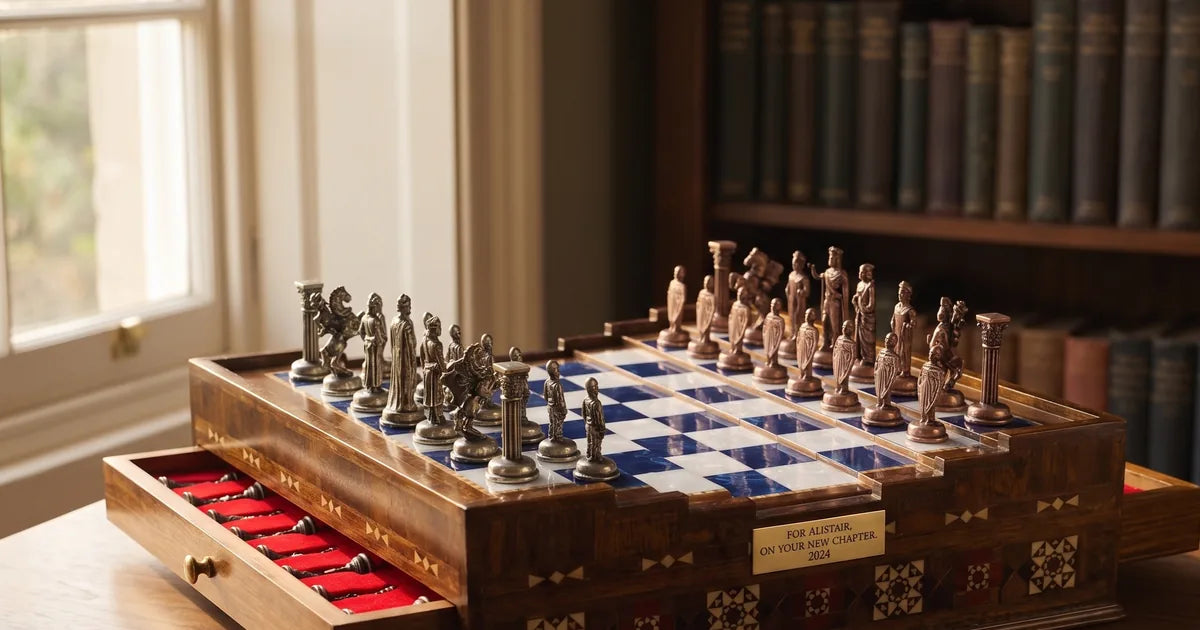
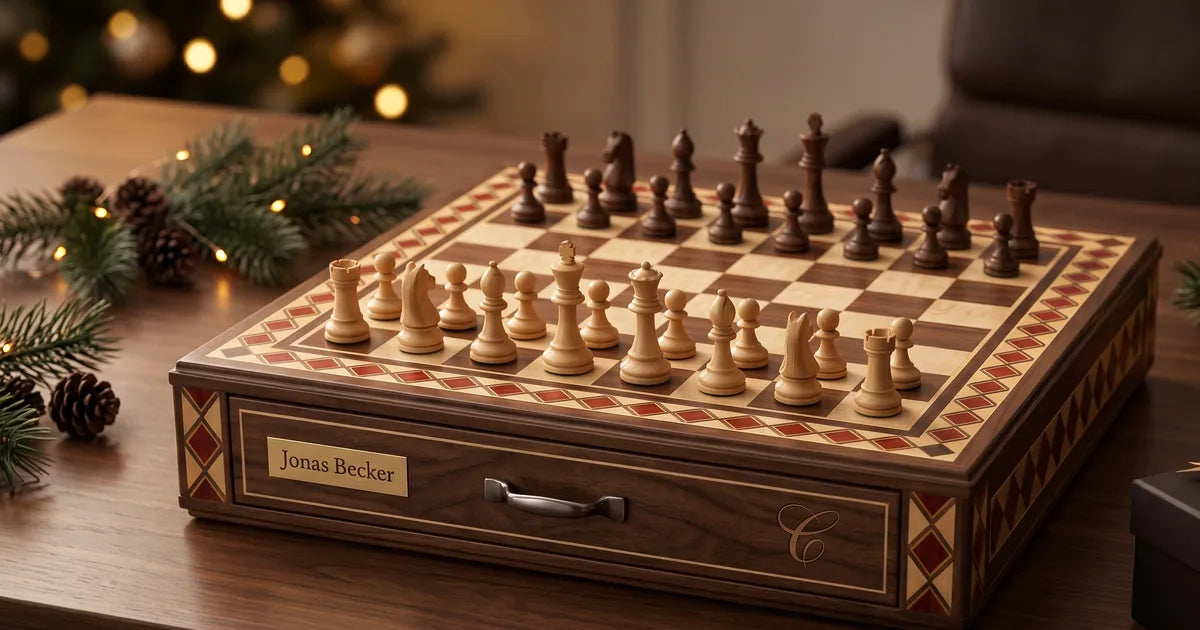
Schachatelier is at home in Berlin. Every set is genuinely handcrafted by experienced makers — and on request, we engrave a personal dedication into the wood at no extra cost.
→ Explore personalized chess sets
Frequently Asked Questions
Can an engraving in wood fade?
No. A laser engraving isn't a layer of color — it's a recess cut into the material. It can't chip or bleach the way printing does.
How do you care for an engraving?
The same as the rest of the wood: dust it dry, and let it get treated during your annual oiling. Never dig into it with a needle or brush — a soft brush handles dust in the grooves just fine.
Does an engraving change over the years?
The engraving itself doesn't — but the surrounding wood darkens, which can gradually reduce contrast over decades. Direct sunlight should be avoided, since it bleaches unevenly.