
Solid Wood or Veneer: The Difference You Only Notice Later
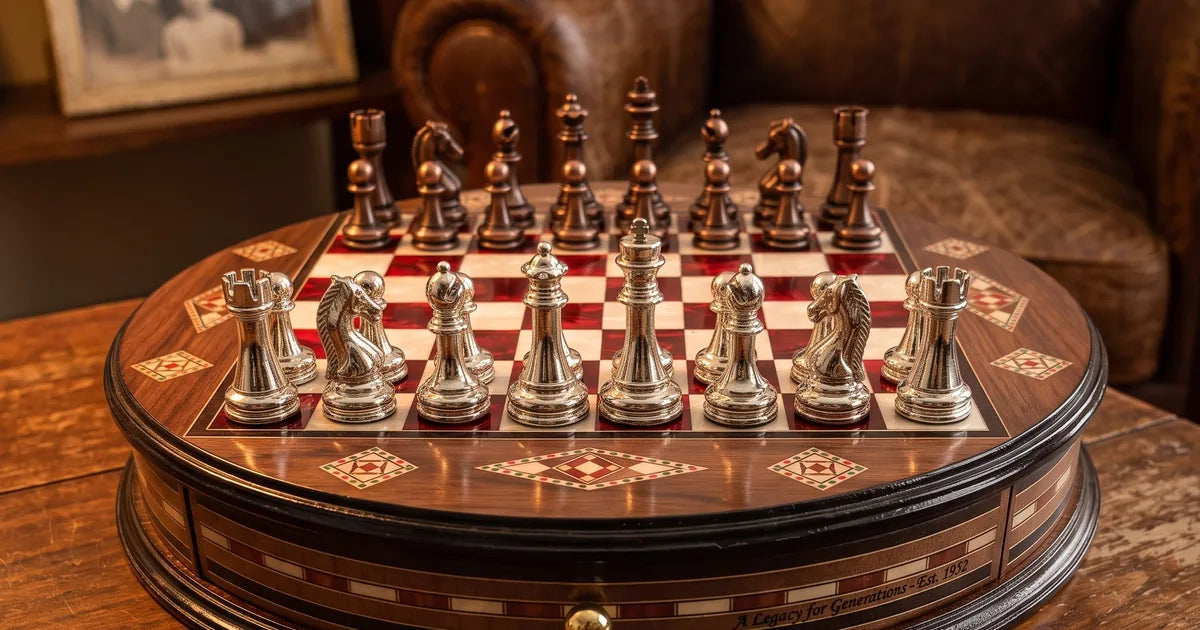
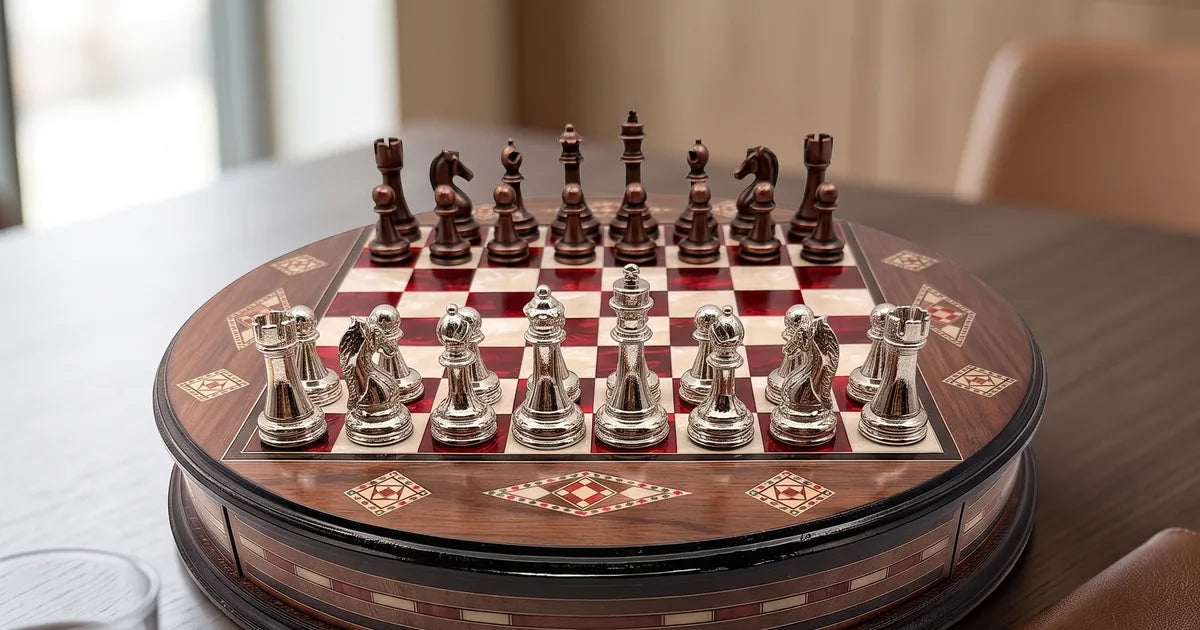
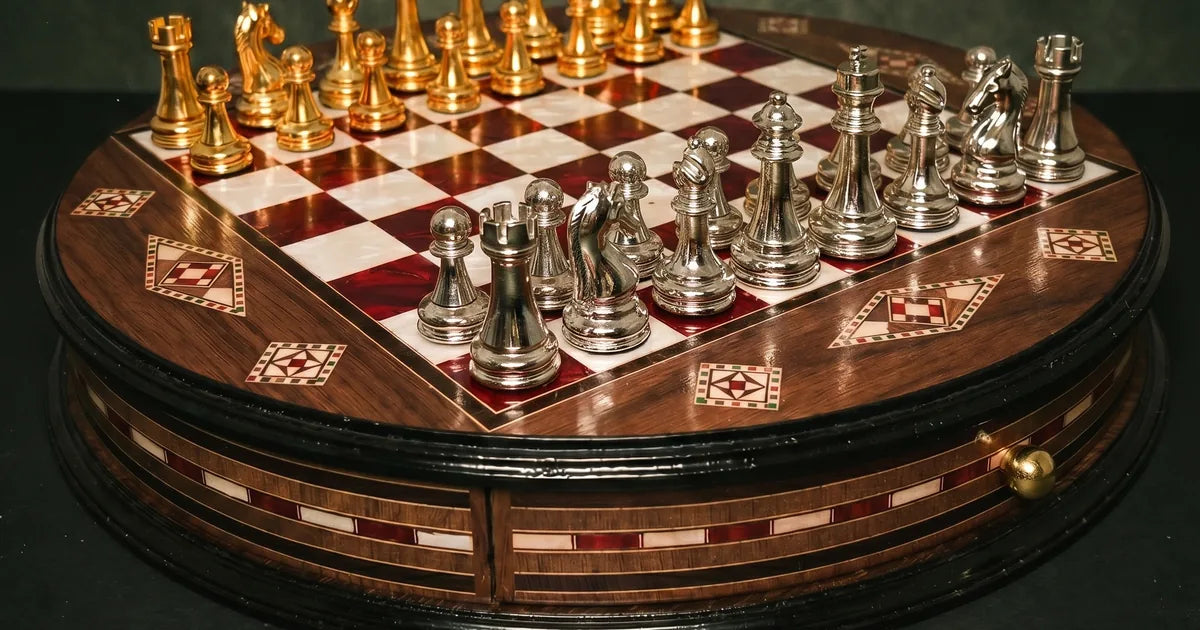
In a product photo, they look identical. Both show warm grain, clean squares, an elegant frame. Both get sold as “wood.“ And yet one of them will still be around in ten years, while the other has long since been thrown out.
The difference between solid wood and veneer is the most important — and the hardest to spot — quality distinction in a chess board.
What veneer actually is
A veneered chess board isn't made of wood at its core — usually it's a chipboard panel. Onto that, wafer-thin layers of real wood, the veneer, are pressed under high heat, then sanded and lacquered.
The result looks good. It's cheap to produce, easy to manufacture precisely, and delivers a flawless image. But the look sits on the surface — it's a coating, not substance.
What makes solid wood different
A solid wood board is, all the way through, exactly the material it appears to be. Pick it up, and you feel it immediately: it has a weight no chipboard can fake. Set a piece down, and it makes a full, solid sound instead of a hollow one.
And it ages differently. Solid wood is allowed to darken, develop patina, and gain character over the years. Small marks of use become part of its story, not the beginning of its end.
How to spot the difference
Hard to tell when shopping online — but there are clues:
- The weight. Is it listed? Solid wood is noticeably heavier.
- The edges. Veneer often gives itself away at the edge with a thin visible line — the seam between the surface layer and the base material underneath.
- The wording. “Solid wood” is a clear claim. “Real wood veneer,“ “wood finish,” or simply “wood“ are not.
- The price. Solid wood can't be cheap. If the price sounds too good, it isn't solid wood.
When veneer is still a reasonable choice
In fairness: veneer isn't inherently bad. For a travel board that lives in a backpack, or a second board for club play, it can be perfectly adequate. It's lighter and cheaper — two genuine advantages.
The real question is different: what is this board meant to be? Something you use, or something you keep? Anyone thinking of a chess set as a gift, a family heirloom, or an object in the living room should choose solid wood without hesitation.
The ten-year test
This is where everything shows. Veneer lifts at the edges, bubbles when moisture creeps underneath, and chips at the corners. There's practically no fixing it.
A solid wood board, after ten years, has darkened, maybe picked up a few marks — and looks better than it did on day one. If needed, it can be sanded and re-oiled. It isn't something you use up. It's something you own.
Schachatelier: at home in Berlin
Schachatelier is at home in Berlin. Every set is genuinely handcrafted by experienced makers in solid wood — for people who don't want to replace a chess set, but pass it on.
→ Explore handcrafted chess sets
Frequently Asked Questions
What's the difference between solid wood and veneer?
Solid wood is real wood all the way through. A veneered board has a chipboard core with thin layers of real wood glued on top. They can look similar, but veneer can lift and chip over time.
How can I tell if a chess board is solid wood?
By the weight, the edges (veneer often shows a thin seam line), the product description (“solid wood” rather than “wood finish“), and the price — solid wood can't be cheap.
Is veneer always worse?
Not necessarily. For travel boards or a second set, veneer is lighter and more affordable. But for a gift, a keepsake, or a set meant to last, solid wood is the better choice — it holds up for decades.