
Which Wood Combination Works Best? Light and Dark Contrast Compared
A chess board is almost always made from two woods — one light, one dark. Which combination is right depends less on personal taste than most people think. There are clear, proven patterns.
The golden rule: contrast over extremes
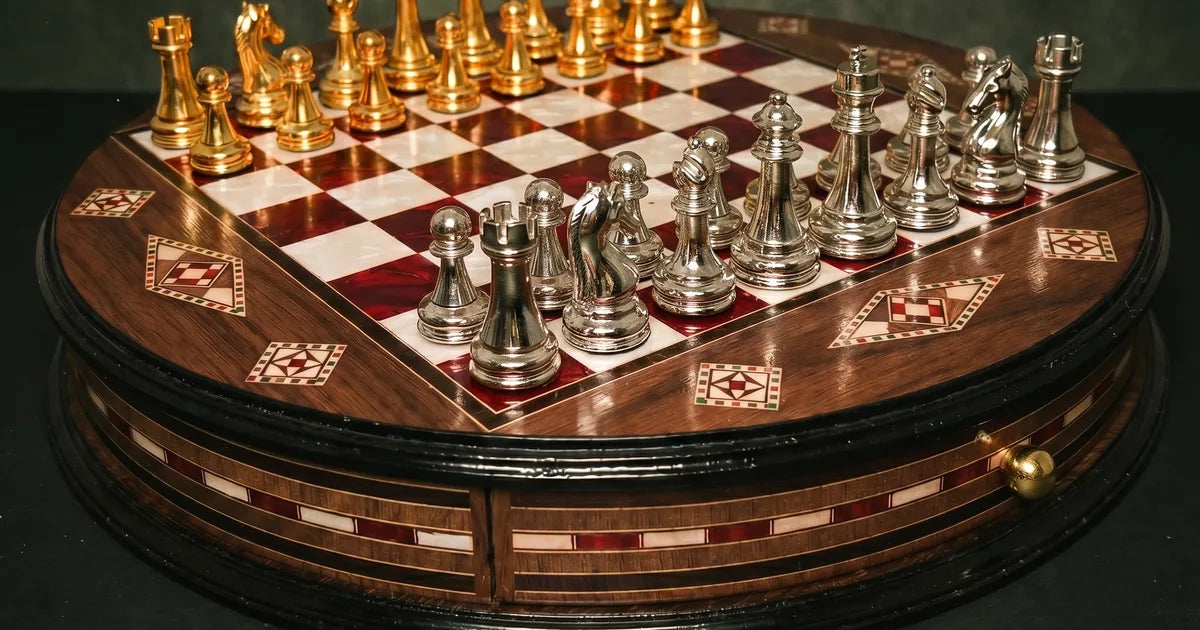
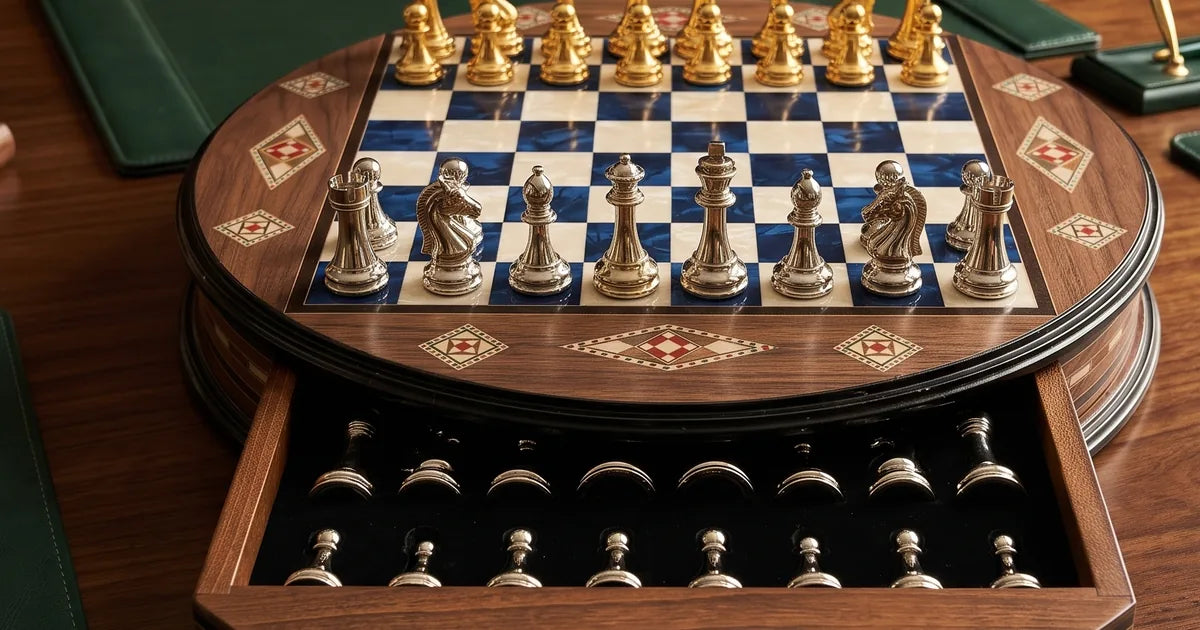
The most important principle: the dark squares should be lighter than the dark pieces, or the pieces visually disappear into the board. Plain black and white is almost never the best choice — it tires the eyes faster during long games than a warm contrast does.
The classic pairing: walnut and maple
Most high-quality boards pair dark walnut with light maple. The warm brown-and-cream contrast is easy on the eyes, timeless, and fits almost any interior.
For the pieces: ebony and boxwood
A different but equally proven combination has become the standard for pieces: deep ebony for the dark pieces, cream-white boxwood for the light ones. This pairing offers the strongest contrast within the pieces themselves — important, since pieces need to be recognizable from a distance.
What doesn't work together
Two very dark woods for the board and dark pieces create a busy, hard-to-read overall picture. Likewise, overly light, low-contrast combinations often look pale and less refined. The key always lies in the contrast between the two layers — board and pieces.
Schachatelier: at home in Berlin
Schachatelier is at home in Berlin. Every set is handcrafted by experienced makers — with wood combinations proven over generations.
→ Discover handcrafted collector's pieces
Frequently Asked Questions
Which wood combination works best for a chess board?
The classic pairing of dark walnut and light maple is considered especially easy on the eyes and timeless, since it offers a warm contrast rather than a harsh black-and-white one.
Which wood combination works best for chess pieces?
Ebony for the dark pieces and boxwood for the light ones is the most proven combination — it offers maximum, easily recognizable contrast.
Why should you avoid plain black and white?
Plain black and white tires the eyes faster during long games than a warm wood contrast, and often looks less refined than a natural wood pairing.