
Corporate Gifts and the $25 IRS Limit: The Number That Shapes Everything
There's a number every business owner runs into eventually: $25. It comes up in nearly every conversation about corporate gifting, gets misunderstood constantly — and quietly explains why so many companies hand out the exact same thing year after year: wine, chocolates, branded pens.
Here's what's actually behind that number, and why it applies far less often than most people assume.
Where the $25 limit comes from
The rule itself is simple: the IRS allows businesses to deduct only $25 per recipient per year for gifts given to individuals — clients, business contacts, anyone outside your own company. That limit hasn't changed since 1962. Go over it, and the excess simply isn't deductible; the $25 itself still is, but nothing beyond it.
That explains the caution. It doesn't explain why the number gets treated as a hard ceiling on gift quality across the board — because it isn't one.
The exception almost nobody uses: engraving doesn't count
Here's the detail that changes everything, and most business owners have never heard it: incidental costs — packaging, insuring, shipping, and specifically engraving — don't count toward the $25 limit at all. They're deductible on top of it.
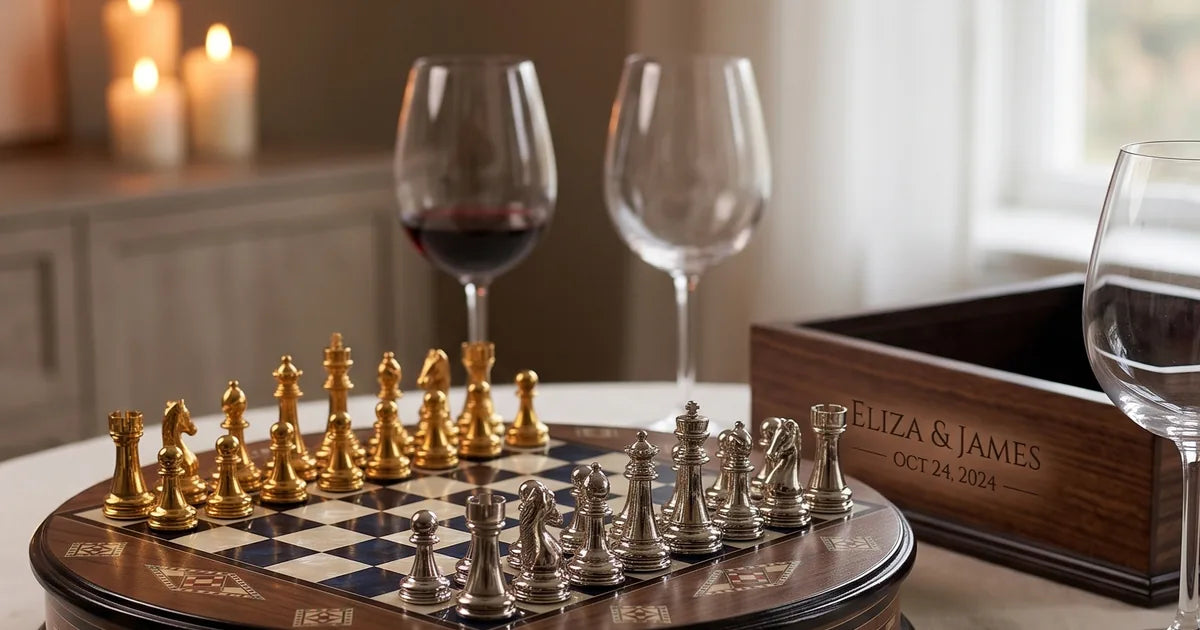
In practice, that means a $25 chess set with a $40 custom engraving is still within the rules — the engraving is a separate, fully deductible cost. Most companies never structure a gift this way, simply because nobody told them the exception exists.
The bigger exception: gifts to the business itself
The $25 limit applies only to gifts made to an individual. A gift given to a company for genuine business use — something the whole office benefits from, not one specific person — isn't subject to the cap at all.
And for gifts to employees specifically: cash and gift cards are treated as taxable wages, but non-cash items — a nice physical gift, something for a milestone, a holiday present — typically qualify as deductible, non-taxable “de minimis“ benefits under separate rules. This is exactly where a meaningful gift for a retirement or a service anniversary belongs — it isn't the same $25 cap that governs client gifts at all.
Why this shapes gifting culture so heavily
The result shows up in every office: the drawer with the third branded pen, the bottle of wine from last year's close, the notebook with someone else's logo on it.
It's not bad intent. It's the predictable outcome of a limit that's pushed an entire market into one price bracket — even in situations where the rules don't actually require it. And a gift that only exists because it stayed under a number reads that way, whether the recipient knows the tax code or not.
When a higher-quality gift is worth it
The real question isn't tax-driven — it's strategic. Do you want to give a lot of people something small, or a few people something that actually lands?
For wide distribution to dozens of contacts, an inexpensive gift makes complete sense. But for the key client, the longtime partner, the employee marking thirty years — the math looks different. A gift someone still remembers in ten years costs more than $25. It's also a different kind of gift entirely.
What makes a good corporate gift
- It lasts. Consumables are gone in two weeks — and the memory goes with them.
- It's visible. An object that sits in an office or living room keeps the sender in mind for years.
- It advertises quietly. A logo engraved discreetly into wood reads like a signature. A printed one reads like an ad.
- It means someone specific. A personal touch turns an obligatory gesture into an actual gift.
One important note
Tax rules change, depend on individual circumstances, and can only be outlined in general terms here. We aren't accountants — for guidance on your specific situation, a tax professional is the right call. This isn't a substitute for that advice; it's meant to show that a single number shouldn't dictate your entire approach to gifting.
Schachatelier: at home in Berlin
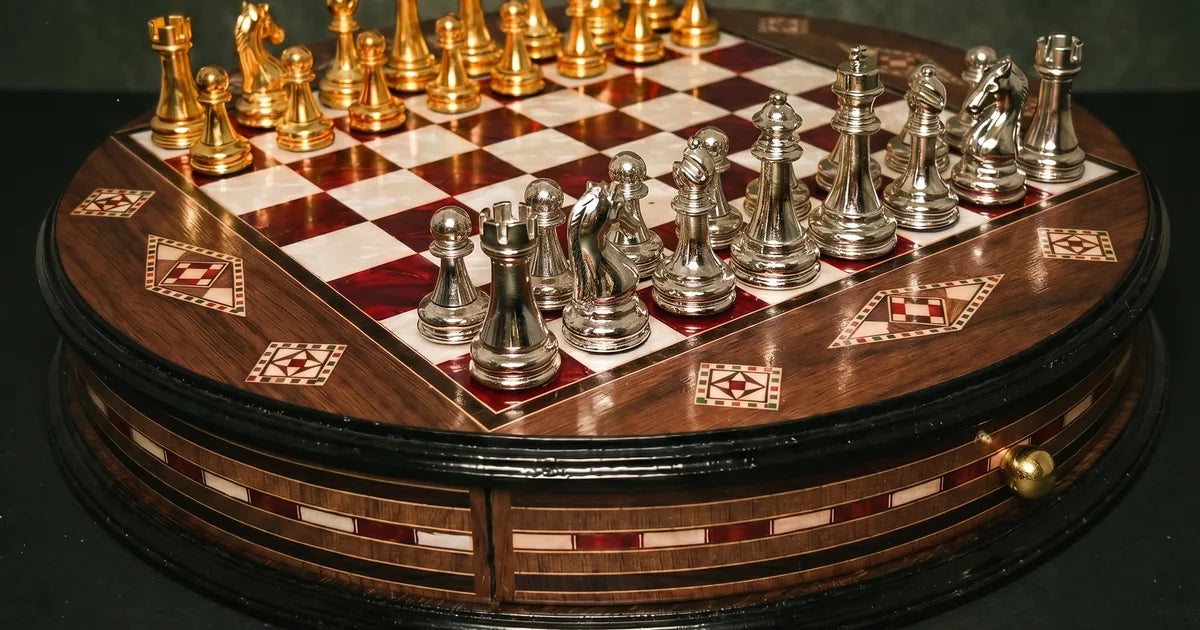
Schachatelier is at home in Berlin. Every set is genuinely handcrafted by experienced makers — for companies who don't want to default to the obvious choice for the gifts that actually matter. On request, we engrave your logo or a dedication discreetly into the wood.
→ Explore personalized chess sets
Frequently Asked Questions
What is the $25 IRS limit on business gifts?
Businesses can deduct up to $25 per recipient per year for gifts given to individuals outside the company. The limit has been unchanged since 1962. Amounts above $25 simply aren't deductible — the details depend on your specific situation, so a tax professional is the right resource.
Does the $25 limit apply to engraving or personalization?
No. Incidental costs — including engraving, packaging, and shipping — don't count toward the $25 limit and are separately deductible. This makes a personalized, higher-value gift more feasible than most businesses realize.
Does the $25 limit apply to gifts for employees?
No, different rules apply to employee gifts than to client or business-contact gifts. This matters especially for occasions like a service anniversary or retirement, where a meaningful gift is worth considering — ideally with guidance from a tax professional.