
Finding the Right Chess Board: What Really Matters When Choosing
A chess board is rarely chosen at random. Sometimes the pieces are already there — maybe a beautiful old set passed down through the family — and the board is missing. Sometimes the old board is scratched and warped, and the good pieces deserve better. And sometimes it's meant to be a gift.
So which chess board is right? Five questions lead to the right choice.
1. What will the board be used for?
The first question matters most, because it shapes all the others. If you play in a club or train regularly, you need a board that is above all comfortable to play on. If you play casually with family or friends, you're looking for an all-rounder for the living room. And if you see the board as an object in the room as well, wood, craftsmanship and presence matter more.
For travel, on the other hand, one thing counts above all: that it's compact and sturdy.
2. Does the board suit the pieces you already own?
If the pieces are already there, there's one fixed condition: board and pieces have to match in proportion — and the king's height is what decides it. How to check that with the formula, a size chart and the four-pawn test is explained in our guide Chess Board Size: Dimensions, Square Size and Matching King Height.
The style should match too. Classic Staunton pieces look most at home on a calm, classic wooden board; a heavily ornamented board, by contrast, can quickly overwhelm simple pieces.
3. Which wood and which contrast?
This is where the most common aesthetic mistake happens. Dark pieces on a very dark board vanish into the dark squares — you end up remembering where they are instead of seeing it.
As a rule of thumb: the dark squares should be lighter than the dark pieces. That's why walnut-and-maple boards paired with boxwood pieces are the classic combination — warm brown instead of jet black, so the pieces stay easy to read.
How the individual wood types differ in color, grain and character is shown in our wood types comparison.
4. With or without coordinates?
A question of purpose: if you play in a club, train, or record games, you'll want coordinates along the board's edge — the letters and numbers. They make notation and analysis far easier.
If you see the board mainly as a beautiful object in the living room, you can skip them — without coordinates, the board reads as calmer and cleaner.
5. Is it meant to be a gift?
Gifting follows its own rules. The recipient shouldn't have to measure, buy anything extra or mix and match — which is why a complete set with board and pieces matched from the start is usually the safer choice than a board on its own.
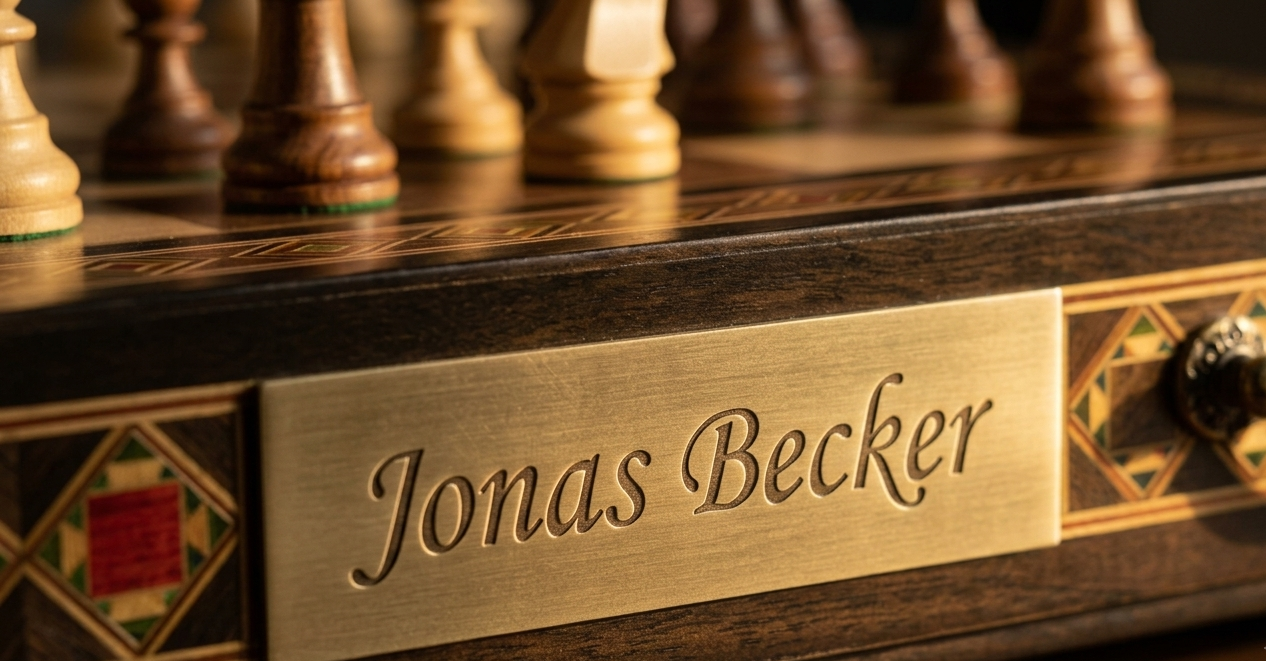
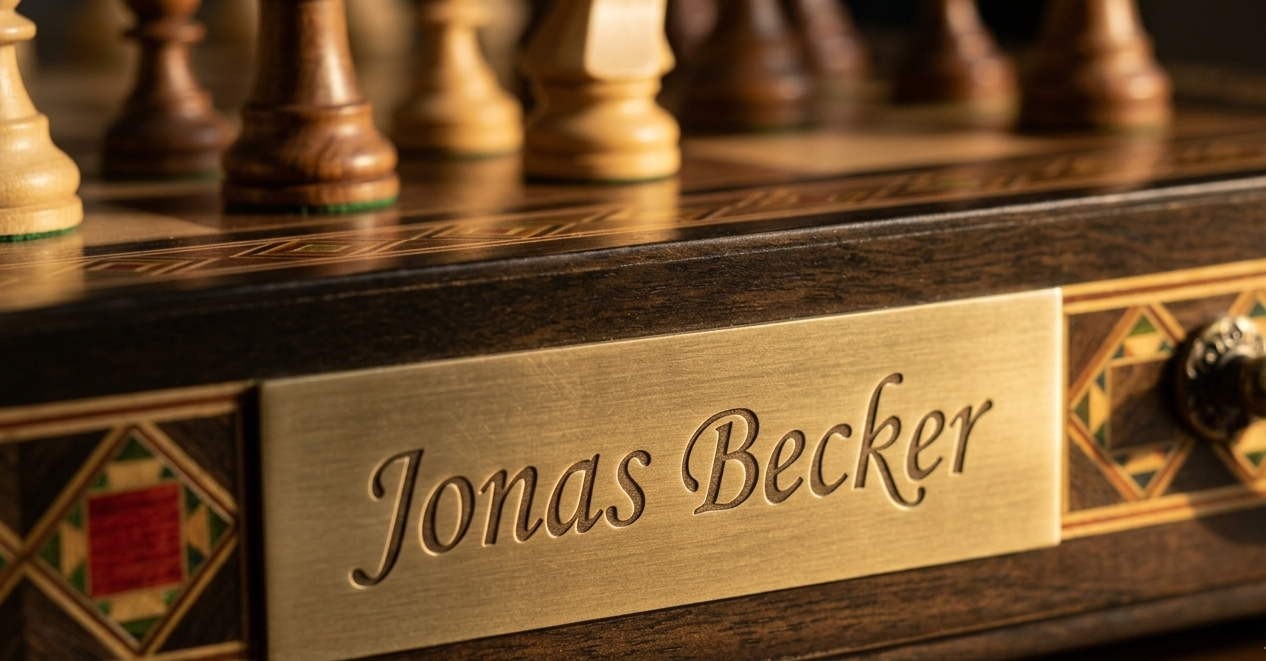
An engraving makes a gift personal — with a name, a date or a short dedication, for example. Personal engraving is available on most Schachatelier sets.
The mistake almost everyone makes
You fall for a board — and only realize at home that it doesn't suit the pieces: they look lost on it, disappear into its colors or get in each other's way.
The better order: settle the pieces first, then choose the board. Or buy a set where both belong together from the start.
Schachatelier: at home in Berlin
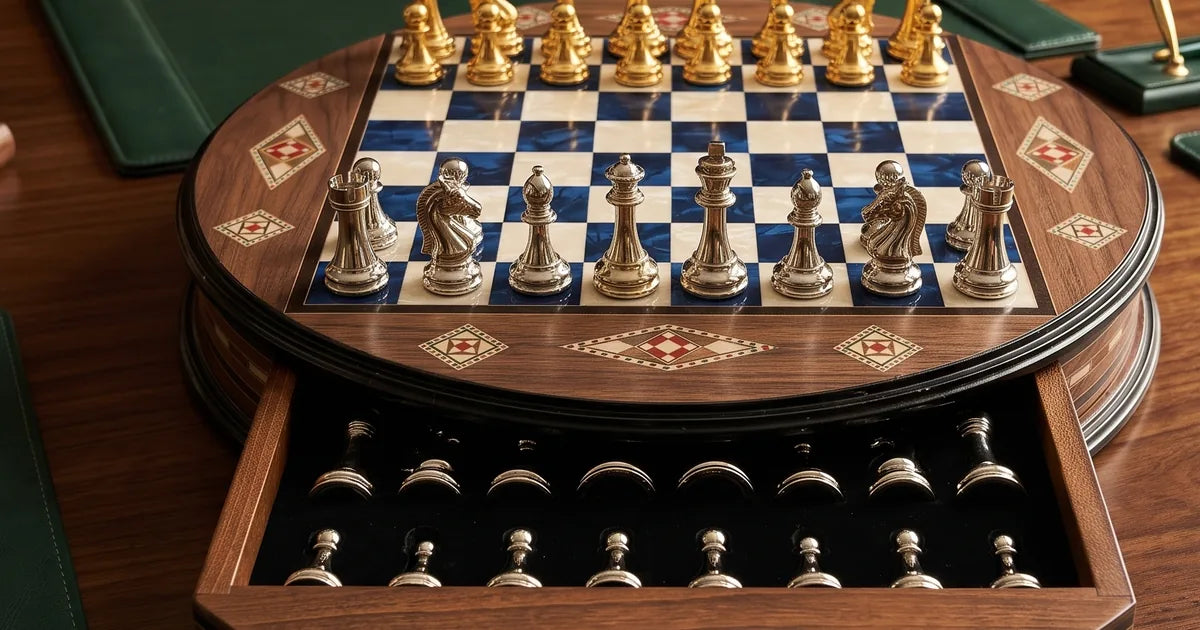
Schachatelier is at home in Berlin. Every set is genuinely handcrafted by experienced makers — with board and pieces designed together from the start.
→ Explore handcrafted chess sets
Frequently Asked Questions
How do I find the right chess board for my pieces?
First check whether board and pieces match in proportion — the king's height is what decides it. After that, wood, contrast and coordinates determine the choice.
What board color works with dark pieces?
The dark squares should be lighter than the dark pieces, or the pieces disappear visually. A warm brown — walnut with maple, for example — keeps the pieces easy to read.
Do I need a chess board with coordinates?
If you play in a club, train or record games, coordinates along the edge are a real help. If the board is mainly an object in the living room, it looks calmer without them.
Which chess board makes a good gift?
Usually a complete set with board and pieces matched to each other — so the recipient doesn't have to measure or buy anything extra. A personal engraving makes the gift even more personal.