
Chess Board Wood Types: Walnut, Maple, and Boxwood Compared
Two chess boards sit side by side. Same size, same squares, similar price. And yet your hand reaches for one of them instinctively. The difference is in the wood — and that's not a minor detail. It's the decision that shapes everything else.
Which wood suits which chess board? A guide to the species that actually matter.
Walnut: dark elegance
Walnut is the wood people picture when they say “luxury.” Dark brown to nearly black, with a lively, warm grain that deepens over the years. It's dense, dimensionally stable, and ages remarkably well.
On a chess board, walnut is typically used for the dark squares and the frame. Its biggest strength: it never looks cheap — not even twenty years in.
Maple: the light counterpart
Maple is nearly white, tightly grained, and dense. That's exactly why it's the classic partner for the light squares: it provides contrast without demanding attention itself.
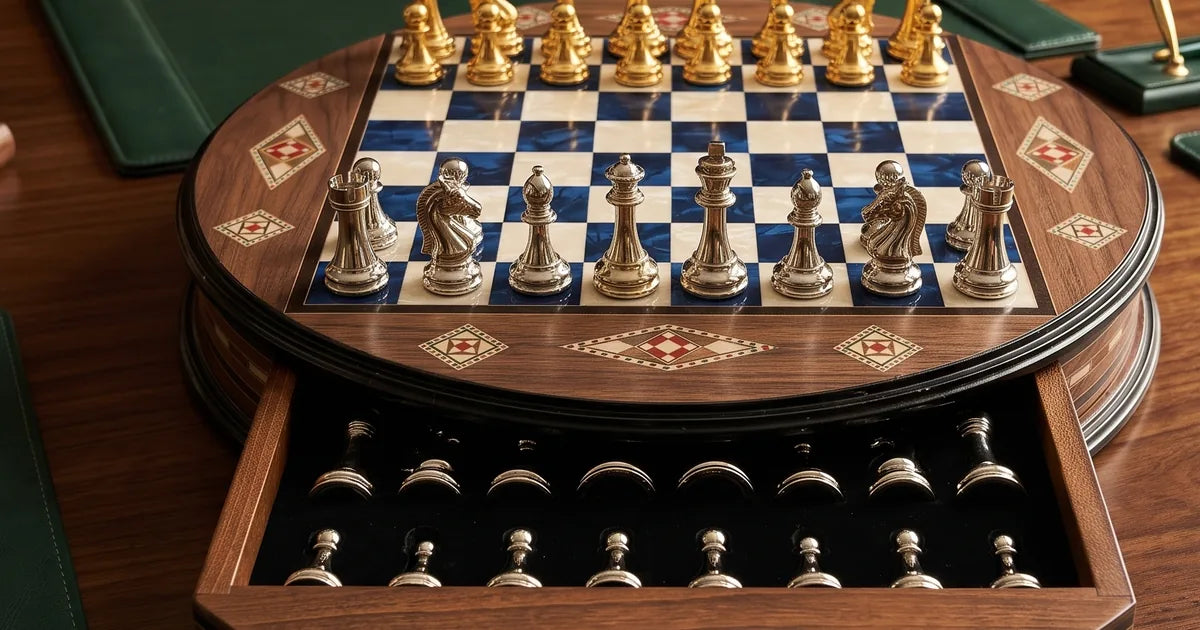
Walnut paired with maple is the classic chess board combination — warm dark against calm light. It has worked for generations because it simply looks right.
Boxwood: the wood of the pieces
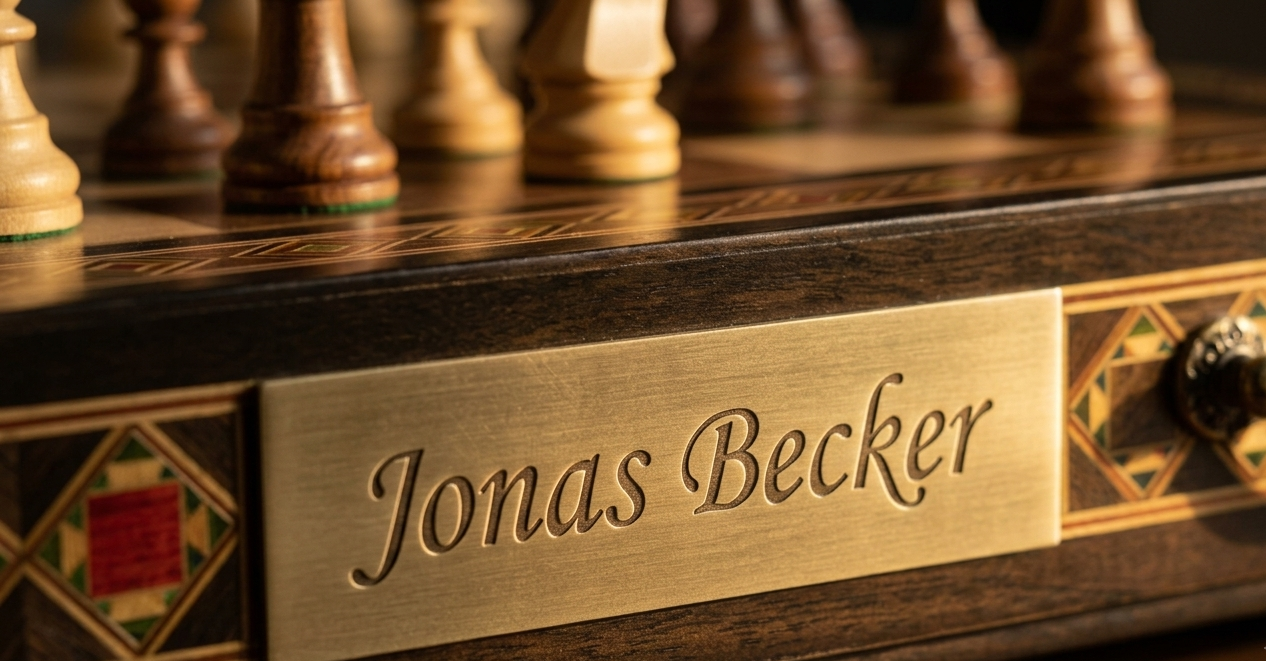
While walnut and maple define the board, boxwood belongs to the pieces. It's light-colored, extremely dense, and fine-grained — which lets it be turned and carved with precision, without chipping. A hand-carved knight in boxwood shows detail that softer woods simply can't hold.
For the dark side, boxwood is often stained — an affordable alternative to true ebony, visually convincing and considerably more sustainable.
Other woods worth knowing
Wenge — very dark, with an almost geometric, tight grain that sometimes looks printed. A more sustainable alternative to ebony.
Sheesham (Indian rosewood) — medium brown, dense, develops a beautiful texture when polished. Common in folding boards and travel sets.
Hornbeam — very hard, fine grain, light-colored. An underrated wood for pieces.
Ebony — the classic for the dark side, deep black and dense. Rare, expensive, and environmentally sensitive to source — which is why good alternatives are gaining ground.
What the wood species tells you about longevity
Hard, dense woods like walnut last for decades because they hold their shape and take pressure well. Lighter, softer woods are more delicate and need a bit more care.
But the wood species alone isn't the deciding factor — it's the combination of quality, craftsmanship, and care. A well-made board in a simpler wood will outlast a poorly made one in an expensive material.
And the more important question: solid or veneered?
This question matters more than any wood species. Many chess boards are built on a chipboard core with thin veneer pressed on top. Visually similar, materially something else entirely: veneer can lift, and edges can chip.
Solid wood, by contrast, is exactly what it appears to be, all the way through. It's allowed to darken, develop patina, and gain character — and it gets more beautiful in the process, not worse.
Each wood species in detail
For anyone who wants to go deeper, we've covered every wood species in its own dedicated article:
- Rosewood in Chess Pieces
- Ebony in Chess Pieces
- Boxwood in Chess Pieces
- Walnut for Chess Boards
- Maple for Chess Boards
- Sheesham in Chess Pieces
- Birch for Chess Boards
- Mahogany for Chess Boards
- Which Wood Combination Works Best?
- Softwood or Hardwood: What Really Matters
Schachatelier: at home in Berlin
Schachatelier is at home in Berlin. Every set is genuinely handcrafted by experienced makers — in solid wood, with a grain that gains character over the years.
→ Explore handcrafted chess sets
Frequently Asked Questions
What's the best wood for a chess board?
The classic combination is walnut for the dark squares and maple for the light ones: warm, high-contrast, and long-lasting. More important than the specific wood, though, is whether the board is solid or just veneered chipboard.
What wood are good chess pieces made from?
Often boxwood: light-colored, very dense, and fine-grained, making it ideal for precisely carved detail. For the dark side, boxwood is often stained as an alternative to rare ebony.
Which wood lasts the longest?
Dense hardwoods like walnut are especially stable and long-lasting. But the deciding factor is the combination of wood quality, craftsmanship, and regular care.